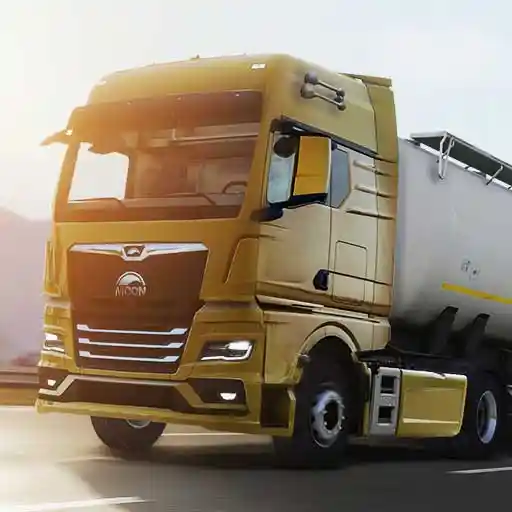
Starting a trucking career in Truckers of Europe 3 feels very different from jumping into an arcade racer. The game asks you to think like a working driver from the first minute: choose a job, collect the trailer, plan the drive around fuel and traffic, and deliver the cargo in good condition so the payment reflects the care you took.
New players often lose money in the first hours for simple reasons. They pick the longest job on the board before learning the controls, rush corners with a heavy trailer, ignore the fuel gauge, or collect damage penalties that eat the profit from an otherwise clean delivery. Every one of those mistakes is easy to avoid once you know how the game rewards patience.
This guide walks through the full beginner path, from the control layout you should learn first to the moment you buy your first truck. If you want the complete feature overview before you start, the homepage guide to Truckers of Europe 3 APK explains the whole game in one place.
Your First Minutes in the Game
When the game opens, resist the urge to jump straight into the longest job on the board. Spend the first minutes in the menus instead. Check the settings, look at the control options, and open the job market so you understand what a delivery involves before the clock and the cargo are counting on you.
Your first drive should be a short, light job. A short route teaches the same skills as a long one, steering, braking, trailer behaviour and parking, but a mistake costs you minutes instead of half an hour of progress. Treat the first delivery as training, not as income.
- Open settings and controls first
- Pick a short first job
- Choose light cargo
- Treat delivery one as practice
Choosing Your First Controls
The game offers tilt, button and touch steering wheel controls, and the right choice for a beginner is the one that gives you small, predictable steering inputs. Buttons are the easiest to learn because every tap does the same thing, while tilt can feel natural but punishes shaky hands on rough roads.
Whichever layout you pick, stay with it for your first ten deliveries. Muscle memory is what turns a nervous new driver into a smooth one, and switching layouts every job resets that learning. You can experiment later, once clean deliveries feel routine rather than lucky.
- Buttons suit most beginners
- Tilt rewards a steady hand
- The touch wheel gives fine control
- Keep one layout for ten jobs
Reading the Job Board Like a Driver
Every job listing tells you the cargo, the destination, the distance and the payment. Beginners usually sort by payment alone, but the smarter figure is payment per kilometre. A slightly lower paying short job often earns more per minute than a headline long haul, and it finishes before fatigue and mistakes creep in.
Also check the cargo type. Fragile and heavy loads demand smoother driving and pay a damage penalty much faster. For your first sessions, favour ordinary cargo on direct routes, and leave the heaviest trailers until your braking distances are second nature.
- Compare pay per kilometre
- Check cargo weight and fragility
- Prefer direct routes early
- Note the destination city
Collecting the Trailer Calmly
A delivery starts before the engine moves. Drive slowly to the trailer, line the truck up straight, and reverse the final metres in a straight line whenever you can. A crooked coupling leads to a crooked start, and straightening a loaded trailer in a tight yard wastes the time you wanted to save.
Once coupled, take the first corner of the yard slowly and watch the trailer in the mirrors. The trailer follows a tighter line than the cab, a fact that catches out almost every new player at the first gate. Wide, slow turns in the yard become wide, safe turns on the road.
- Approach in a straight line
- Reverse slowly the last metres
- Watch the trailer in mirrors
- Take yard corners wide
Driving Your First Route
On the open road, the beginner goal is smoothness. Accelerate gently, brake early, and leave a larger gap to AI traffic than feels necessary. The traffic in this game changes lanes and slows for its own reasons, and the driver who leaves space almost never has to make an emergency stop with a heavy load pushing from behind.
Use the route guidance to look ahead rather than reacting at the last second. Knowing a junction is coming lets you move over early and slow down gradually, which protects both the cargo and your completion time. Fast driving that ends in a collision is always slower than steady driving that arrives clean.
- Accelerate and brake gently
- Leave extra space to traffic
- Read the route ahead
- Steady pace beats rushed pace
Parking the Trailer at the Destination
The delivery point is where beginners lose the most time, because reversing a trailer feels backwards until it clicks. The rule is simple: steer opposite to where you want the trailer to go, in small inputs, and stop often to check your line. Short corrections early beat big corrections late.
If the game offers an easier parking option while you learn, take it without guilt during your first sessions. The goal early on is learning routes and traffic, and parking skill grows with every attempt. Within a week of regular play, the manoeuvre that felt impossible becomes the satisfying end to every job.
- Small steering inputs only
- Stop and check your line
- Use easier parking while learning
- Practice a little every session
Fuel and Damage: The Two Silent Costs
Two systems quietly decide whether a job makes money. Fuel consumption rises with aggressive acceleration, high speed and heavy loads, and running dry ends a delivery completely. Glance at the gauge before long stretches and treat fuel stops as part of the route, not as an interruption.
Damage works the same way. Every scrape with a barrier or another vehicle reduces the condition of truck and cargo, and the repair bill plus cargo penalty comes straight off your earnings. Clean driving is not just realistic, it is the most profitable style in the game.
- Watch the fuel gauge
- Plan fuel stops on long jobs
- Avoid barrier scrapes
- Damage cuts your payment
Earning Your First Truck
Working as a hired driver builds your bank balance safely, because the employer covers the truck while you learn. Save toward your first own truck rather than spending early income the moment it arrives. Owning the truck unlocks the better paying side of the job market and starts your real career progression.
When you buy, choose a balanced first truck rather than the most powerful model you can barely afford. You still need money left for fuel, repairs and your first trailer. A modest truck with cash in reserve earns more in its first week than a flagship truck parked up waiting for repair money.
- Save before you buy
- Keep a repair reserve
- Choose balance over power
- Ownership unlocks better jobs
Beginner Mistakes That Cost Money
The classic beginner mistake is speed. New players drive at full throttle everywhere, then discover that braking distances with a loaded trailer are measured in patience. The second classic is ignoring the mirrors in towns, where tight corners and parked traffic punish wide trailers that cut across them.
The third is skipping fuel on a just long enough route. None of these mistakes come from lack of talent; they come from treating a simulator like a racer. Slow down your decisions, not just the truck, and your earnings graph will climb steadily from the first week.
- Full speed everywhere
- Cutting corners in towns
- Skipping planned fuel stops
- Treating the sim like a racer
Setting Up Your Driver Profile
Before the first job, the game asks you to become someone: a driver with a name, a home base and the beginnings of a record. Treat the setup as more than a form. The details you choose now label every achievement and leaderboard entry you will ever earn, and changing your mind later is always more awkward than choosing well today.
Pick a home region thoughtfully too. Your early jobs cluster around where you start, so beginning somewhere with a busy board and varied routes teaches more per hour than a quiet corner of the map. You can roam everywhere later; the first week is about density of lessons, and busy regions are generous teachers.
- Choose a lasting driver name
- Start in a busy region
- Early jobs cluster at home
- Roam later, learn first
Your Second and Third Deliveries
Delivery two is where the game quietly tests whether delivery one taught you anything. The route will be a little longer, the cargo a little less forgiving, and the yard at the end a little less generous. This gentle escalation is deliberate design: each job asks for everything the last one taught, plus one new thing.
Resist the urge to jump three difficulty levels because the first job went well. A clean streak of gradually harder deliveries builds both the bank balance and the skill record, while one overambitious job can hand back a day of profit in damage. Ambition is welcome here; it just has to queue behind competence.
- Difficulty escalates gently
- One new thing per job
- Clean streaks compound
- Ambition queues behind skill
Building Confidence on Longer Routes
By the end of the first week, take a route that feels slightly too long. The first genuine long drive teaches systems the short jobs cannot: fuel planning across real distance, attention management, and the particular satisfaction of arriving somewhere far away with the load untouched.
Choose that route carefully: mostly highway, a destination with a good board for the return, and a start time when you are fresh. Finish it cleanly and something permanent changes in how you see the map. Distances stop being intimidating numbers and become tomorrow's options.
- One slightly too long route
- Mostly highway first
- Fresh driver, fresh start
- Distance becomes opportunity
A Simple First-Week Plan
Give your first week a shape. Day one and two: short jobs, one control layout, careful parking practice. Day three and four: medium routes with a fuel stop planned in. Day five onwards: your first long haul, taken slowly, with the best paying return job you can find near the destination.
By the end of that week you will know your braking distances, your fuel range, and your parking technique, and you will be close to owning your first truck. That foundation carries the whole career, because every advanced skill in this game is a refinement of these beginner habits. Drivers who want the companion treatment of this side of the game will find it in our controls guide and the safety guide.
- Short jobs first
- Add a fuel stop midweek
- First long haul on day five
- Buy the truck when savings allow