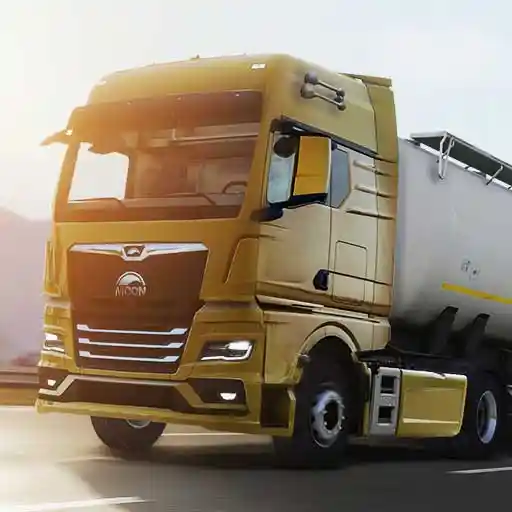
The map in Truckers of Europe 3 is the quiet half of the game. Trucks and trailers get the attention, but where you drive decides how much of every payment survives fuel, time and damage. A well chosen route through the network can be worth more than a more powerful truck on a badly chosen one.
European roads in the game come in clear families, each with its own driving character: fast highways that eat distance, country roads that reward care, and city streets where the last kilometre takes as long as the previous twenty. Learning the character of each family changes how you pick jobs and how you drive them.
This guide tours the map the way a working driver sees it, then turns to route planning: fuel stops, chained jobs and return loads. The homepage Truckers of Europe 3 APK guide covers the rest of the game in full.
Highways: The Fast Spine of the Map
Highways exist to convert time into distance. Sustained speed, gentle curves and divided traffic make them the natural home of long haul work, where your income per hour depends on covering ground without incident. Most profitable long routes spend most of their kilometres here.
Highway driving has its own discipline: plan lane changes early, respect the speed of surrounding traffic, and never let cruising comfort dull your braking awareness. The accidents that happen at highway speed are the expensive ones, and they almost always begin with a late reaction rather than a hard road.
- Distance at steady speed
- Early lane planning
- Comfort hides risk
- Late reactions cost most
Country Roads: Character and Risk
Country roads are where the map shows its personality: narrower lanes, tighter bends, villages, and scenery that reminds you why people love this game. They are also where damage statistics go to be written, because every bend arrives sooner than it looks and oncoming traffic shares your space.
Drive them at the speed the road asks for, not the speed the truck can do. Country routes reward anticipation, wide positioning before bends, and patience behind slower traffic. Arriving two minutes later with an untouched load beats arriving in a ditch with a story.
- Narrower and tighter
- Anticipation over speed
- Wide before bends
- Patience behind traffic
City Deliveries: The Hard Last Kilometre
Cities compress every difficulty into the final stretch: junctions, tight turns, parked vehicles, delivery yards designed by someone who clearly never reversed a trailer. The professional response is to slow the whole phase down and treat the city as a separate, careful job within the job.
Plan your city entry with the route guidance open in your mind before you arrive: which side the destination sits on, where the wide turn is, where you can straighten the trailer before the final approach. Sixty seconds of foresight in the city saves the most expensive minutes in the game.
- Slow the whole phase down
- Scout the approach early
- Wide turns where possible
- Foresight saves minutes
Reading the Route Before You Accept
The smartest moment to plan a route is before you accept the job. Look at the distance, the likely mix of highway and country road, the destination's job board, and your fuel situation. Two jobs with identical pay and distance can differ by twenty minutes of real driving because of the roads they use.
This ten second habit separates career drivers from job grabbers. Over a week of play it quietly redirects you toward the profitable work and away from the scenic traps, and your earnings per hour rise without you driving any faster at all.
- Check road mix
- Check destination board
- Check your fuel
- Ten seconds, real money
Fuel Stop Planning on Long Routes
Long routes should be planned around fuel the way real logistics plans around it: know your working range, note where stops sit along the corridor, and never begin a remote stretch with a gauge you merely hope is enough. Running dry is the one failure that turns a good route into a total loss.
Top up with margin rather than running the tank to fumes. A small detour to fuel while you pass a station costs a minute; a rescue after an empty tank costs the job. Experienced players treat the fuel stop as part of the route rhythm, a breath in the middle of the drive, not an emergency response.
- Know your range
- Note stops along the route
- Keep a margin
- Fuel as rhythm, not rescue
Chaining Jobs Across Regions
A single delivery is a wage; a chain of deliveries is a business. When you arrive in a new city, the next job should ideally start near where the last one ended, keeping empty kilometres close to zero. Regional boards make this possible when you choose destinations with the next load already in mind.
Think of the map as a set of busy hubs connected by corridors. Work that moves you hub to hub keeps the chain unbroken, while work that strands you at a quiet edge costs a dead return. The chain habit, practised over weeks, is worth more than any single job choice you will ever make.
- Arrive where work starts
- Hub to hub thinking
- Avoid stranding drops
- Chains beat single jobs
Weather and Night Change the Map
The same road is a different road in the rain or after dark. Wet surfaces stretch braking distances, night hides the bend that daylight advertised, and both together turn a familiar corridor into fresh work. Route choice should bend with conditions: the direct country shortcut stops being a shortcut when visibility drops.
This is where map knowledge pays double. Knowing which stretches are exposed, twisty or badly lit lets you add margin exactly where the conditions demand it, and hold your pace where the road stays honest. Conditions do not make the map unfair; they make knowledge valuable.
- Wet roads, longer braking
- Night hides the bends
- Shortcuts expire in bad weather
- Knowledge adds margin where needed
Border Crossings and Long Corridors
The map's longest corridors are its economy in physical form: they connect the busy regions, and learning their rhythm, where fuel sits, where the road narrows, where night falls mid route, turns a daunting line on the map into a familiar commute. Corridor knowledge is a career asset that never depreciates.
Run a new corridor first in easy conditions: daylight, dry, a forgiving load. Graduate it to your working set only after it has taught you its secrets cheaply. Drivers who learn corridors in storms pay storm prices for daylight lessons.
- Corridors connect the economy
- Learn their fuel rhythm
- Easy conditions first
- Secrets learned cheaply
Seasonal Light and Your Schedule
The day and night cycle is a scheduling tool if you let it be. Plan the hard sections, the twisty country stretches and the tight city arrivals, for the light, and let the forgiving highway kilometres absorb the darkness. You cannot always arrange this, but when a job offers timing freedom, the arrangement is free profit.
The same thinking applies to weather you can see coming on a long route. A dry start does not promise a dry finish, and the driver who front loads the difficult driving while conditions hold is simply spending good luck wisely instead of being surprised by its end.
- Hard parts in daylight
- Highways absorb darkness
- Timing freedom is profit
- Spend good conditions wisely
Learning a Region Properly
Regions are learned the way drivers have always learned them: by working them. A new area deserves a deliberate first week: short jobs inside it, attention on where the fuel, the yards and the awkward junctions live, and no long commitments through it until the basics are mapped in your head.
After that week the region changes status in your planning. It stops being scenery with risks and becomes a tool with known properties, and your job choices across the whole map get smarter, because every chained route is only as reliable as your knowledge of the regions it crosses.
- Work a region to learn it
- Short jobs first inside it
- Fuel, yards, junctions
- Knowledge makes chains reliable
Reading the Map Backwards
Experienced dispatchers read a route backwards: destination first, then the approach into it, then the middle, then the start. The backwards read answers the questions that actually decide profitability in Truckers of Europe 3: what work waits at the far end, how hard is the final arrival, and does the route strand you or set you up. The forward read, start first, is how beginners end up surprised by their own jobs.
Practise the backwards read on your next ten acceptances and watch your chain quality change. Jobs you would have grabbed get declined for reasons you can articulate, and jobs you would have scrolled past reveal themselves as connectors between hubs. The map does not change at all. The reader does, which was the upgrade available all along.
- Destination first
- Arrival and aftermath
- Chains improve visibly
- The reader upgrades
Building Your Own Mental Map
After enough deliveries, something valuable forms: you stop reading the map and start remembering it. You know which city yard is tight, which corridor eats fuel, which route looks short and drives long. That mental map is a genuine career asset no purchase in the game can shortcut.
Build it deliberately. After each job, note one thing the route taught you. Within a month you will be planning like a dispatcher, and the map will have changed from scenery into the tool that quietly decides your income. Drivers who want the companion treatment of this side of the game will find it in our European roads guide and the long distance driving guide.
- Memory beats re-reading
- Note one lesson per job
- Know the tight yards
- The map becomes a tool