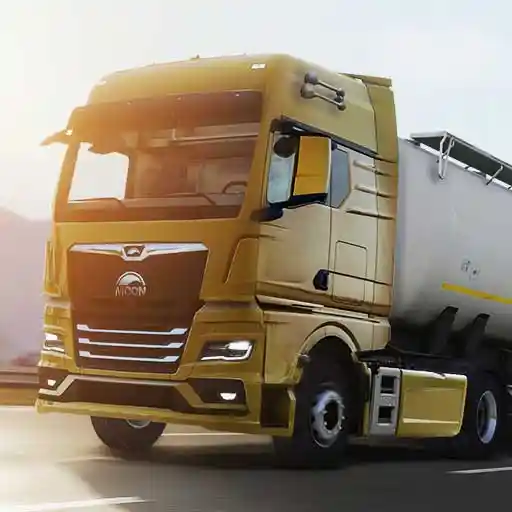
Every player asks the same question in their first week: which truck is the best? The honest answer the game gives back is a better question: best for what? A truck that flies up mountain routes with a heavy load drinks fuel on flat motorway work, and the economy champion that sips diesel on light cargo struggles exactly where the premiums are paid.
Truck choice in this game is a matching exercise between machine and work. Understanding what the specifications actually change, power, chassis, economy and handling, turns the dealership from a beauty contest into a toolbox where every tool has a job it does better than the others.
This guide explains how to read a truck, how chassis choice changes the work you can take, and a sensible buying order for a growing career. You will find the full game overview in the Truckers of Europe 3 guide on the homepage.
What the Specifications Really Change
Power decides how a truck behaves when the road stops being flat. On level motorway almost any truck reaches cruising speed eventually, but on grades with a heavy trailer, power is the difference between holding your speed and crawling while the schedule and the fuel gauge both suffer.
Handling and braking matter just as much in practice. A truck that feels stable and stops predictably protects cargo value on every delivery, which is real money. Read specifications as a package: the best earning truck is the one whose whole balance suits the work you actually run, not the one with the biggest single number.
- Power shows on hills
- Stability protects cargo
- Braking is earning power
- Balance beats one big number
Chassis Choice and the Work It Unlocks
Chassis configuration decides which trailers couple happily and how weight spreads across the axles. More axles generally mean heavier work unlocked and steadier behaviour under load, at the cost of a longer, less nimble machine that needs more room in yards and tight town streets.
Match the chassis to your cargo ambitions. If your income comes from standard freight on direct routes, a mid configuration covers nearly everything. If you are building toward the heavy haul premiums, the heavier chassis stops being optional and becomes the price of admission to that work.
- Axles spread the weight
- Heavier chassis unlock heavy work
- Length costs nimbleness
- Match chassis to ambition
Best Truck for Beginners
The best first truck is forgiving: stable under braking, modest thirst, cheap to repair, and capable enough for standard freight across the whole map. Beginners do not need speed; they need a machine that does not amplify their mistakes while they learn distances, fuel planning and parking.
Resist the flagship temptation. The money saved by buying the sensible truck becomes your repair reserve and your trailer fund, and those two things earn more in the first month than a power figure on a specification sheet ever will.
- Forgiving beats fast
- Low thirst, low repairs
- Savings fund the trailer
- Learn on a balanced machine
Best Trucks for Heavy Loads
Heavy work is where power and chassis stop being preferences. The load dictates the machine: strong pulling power for grades, the axle count to carry the weight legally and stably, and braking that stays composed when a heavy trailer is pushing through every descent.
Heavy specialists earn their keep only if you feed them heavy jobs. If your board is mostly standard freight, the flagship heavy truck is an expensive ornament. Buy into this class when heavy work is a regular part of your week, and its premium income will justify the machine quickly.
- Power for grades
- Axles for the weight
- Braking under push
- Feed it heavy work or skip it
Best Trucks for Long Motorway Routes
Long distance standard freight rewards a different balance: comfortable cruising, honest fuel economy, and stability at sustained speed. The truck that wins here is rarely the most powerful; it is the one that arrives with the most profit left after hundreds of kilometres of fuel have been accounted for.
Aerodynamic, economy minded choices quietly out-earn brutes on these routes. Small savings per kilometre sound dull until you multiply them by the distance a long haul career actually covers, at which point economy is revealed as one of the highest paying specifications in the game.
- Economy compounds over distance
- Cruise stability matters
- Sustained speed, low stress
- Small savings, big totals
Fuel Economy Versus Power: The Honest Trade
Every truck sits somewhere on the line between thirst and strength. More power generally burns more fuel even when you are not using it, because you carry the bigger engine everywhere. Less power saves fuel until the road turns uphill, where an underpowered truck burns time and sometimes more fuel working at its limit.
The trade resolves by route profile. Flat regions and light cargo: economy wins. Mountain regions and heavy cargo: power wins. Players who run a mixed board should sit in the middle of the line, which is exactly why balanced trucks are the most popular working machines in the game.
- Power carries a fuel cost
- Weak trucks suffer uphill
- Route profile decides
- Middle suits mixed work
A Sensible Buying Order for a Growing Career
First, the balanced all-rounder that earns from day one. Second, specialise toward where your income is actually growing: the heavy machine if premiums are calling, or the economy cruiser if long standard routes are your bread and butter. Third, with two earners working, the fun purchase finally makes sense.
This order keeps every purchase funded by the trucks before it. A fleet built this way never sits idle for lack of repair money, and each new machine arrives as an expansion of a working business rather than a gamble that the business will somehow follow.
- All-rounder first
- Specialise toward income
- Fun purchase third
- Each truck funds the next
Cab View, Mirrors and Comfort
Specifications do not list the thing you will stare at for a thousand kilometres: the cab. Mirror placement, instrument readability and the general view out decide how tiring a truck is to drive well, and a tiring truck quietly taxes every delivery you make with it. Where the game lets you sit in a truck before buying, sit in it.
Comfort is not softness; it is error prevention. A driver who can read the road and the mirrors without strain makes better decisions in the final third of a long route, which is when the expensive mistakes queue up. The best truck for you includes the cab your eyes vote for.
- Sit before you buy
- Mirrors are equipment
- Comfort prevents errors
- Late route decisions matter
Resale and the Upgrade Path
Trucks are not forever purchases. As your career specialises, the all rounder that taught you the game becomes the trade in that funds the specialist, and thinking about that path at purchase time changes what you buy. Popular, versatile machines hold their usefulness longest because every career stage can employ them.
Plan the path loosely: all rounder, specialist, then the machine you simply want. Loose planning beats both extremes, the player who never upgrades and the player who changes trucks monthly and pays the churn costs every time. The fleet should evolve like the career: deliberately, and in the direction of the work.
- Trucks are stepping stones
- Versatility holds value
- Plan the path loosely
- Churn costs money
Thinking Like the Used Market
Every truck you buy will one day be a truck you sell or retire, and that simple fact deserves a seat in the purchase meeting. Machines that suit many jobs keep their usefulness across a whole career, while narrow specialists can strand value when your work changes direction. Versatility is not just a driving quality; it is a financial one.
This is another reason the balanced first truck is such a reliable recommendation. It can open the career, support the specialist era as the dependable second machine, and still be earning on the day a flagship arrives. Few purchases in any game work that hard for that long.
- Sell what you buy, mentally
- Versatility is financial
- Balanced trucks work longest
- Second machine value
The Test of a Good Purchase
A month after buying, a good truck purchase in Truckers of Europe 3 has a recognisable signature: the machine is working most days, its costs are boring, and the jobs it was bought for have quietly become the centre of your income. A bad purchase has the opposite signature: special pleading, idle days explained away, and a growing hope that the next job type will finally suit it.
Use the signature, not the showroom feeling, to judge your fleet decisions, including retroactively. The truck you defend with earnings data is a tool; the truck you defend with adjectives is a pet. Pets are allowed in this game, they are even part of its charm, but they should be bought with pet money, after the tools are paid for.
- Judge after a month
- Working, boring, central
- Data versus adjectives
- Tools before pets
Testing Before You Commit
Wherever the game lets you experience a truck before ownership, through hired work or trial opportunities, take it. Specification sheets cannot tell you how a cab feels at night in the rain, how the mirrors sit, or whether the braking character suits your hands. Ten minutes of driving answers questions no number can.
If no trial is available, read the purchase as a long decision anyway. Check the running costs, the chassis, the resale logic, and how the truck fits the jobs on your board this month, not the jobs you dream about next season. The right truck is the one that earns in your real career, starting today. Drivers who want the companion treatment of this side of the game will find it in our trucks and chassis guide and the money guide.
- Drive before buying if possible
- Feel beats figures
- Check running costs
- Buy for this month's work